

 Français
 Deutsch
 Italiano
 Español
Shopping Cart

- -40%
In Stock
Seven months. That is roughly how long your helmet and goggles have been sitting at the back of a closet, along with your mittens and your ski suit. They served you faithfully all last winter, but before you take them back to the slopes, they deserve a quick technical check.
Good news: getting your ski gear ready takes no tools and no special skills. Ten minutes is enough to spot what can go back on the slopes for another season, what needs cleaning and what is better replaced. Follow the guide, point by point.
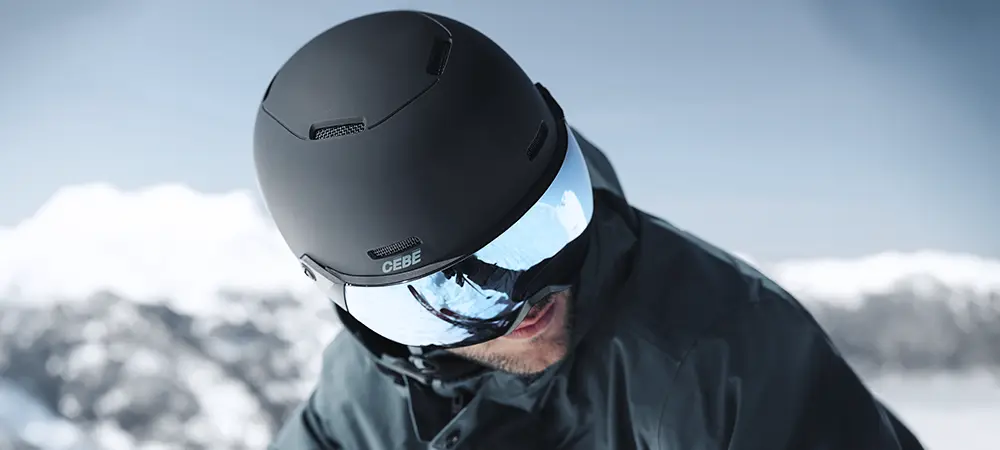
The helmet is the only piece of equipment whose condition can be hard to judge by eye. All the more reason to inspect it carefully.
Run your hand over the entire outer surface. A crack, a bump or a dent, even a slight one, shows that the helmet has taken an impact. If so, replace it without hesitation. Simple surface scratches, on the other hand, are mostly cosmetic.
Remove the removable comfort pads if your model allows it. Underneath, the structure that absorbs impacts should show no cracks or crushed areas, however slight. Comfort padding that smells musty can be washed; padding that is crumbling needs replacing.
Pull firmly on the straps and test the buckle several times. It should lock with a clear click and not open under tension. A frayed strap is a warning sign. The plastic of the fastener on an ageing helmet can become brittle, so pay particular attention to it.
Turn the tightening dial in both directions. It should adjust the fit around your head without forcing or catching. While you are at it, check that the helmet does not move when you shake your head.
A child can grow several centimetres of head circumference in a single season. If the helmet presses on the forehead or temples, or no longer closes properly, it is time to move up a size. A helmet that is too small protects poorly, and so does one bought “for them to grow into”.
Two situations are non-negotiable:
Even if nothing shows: the internal structure may have absorbed the impact and will not be able to do it a second time.
Materials age with UV, temperature changes and sweat. Manufacturers generally recommend replacing a helmet after around 5 years, sooner with intensive use.
Is your helmet dirty or in need of a good clean? Find all our tips in our complete guide to ski helmet care.
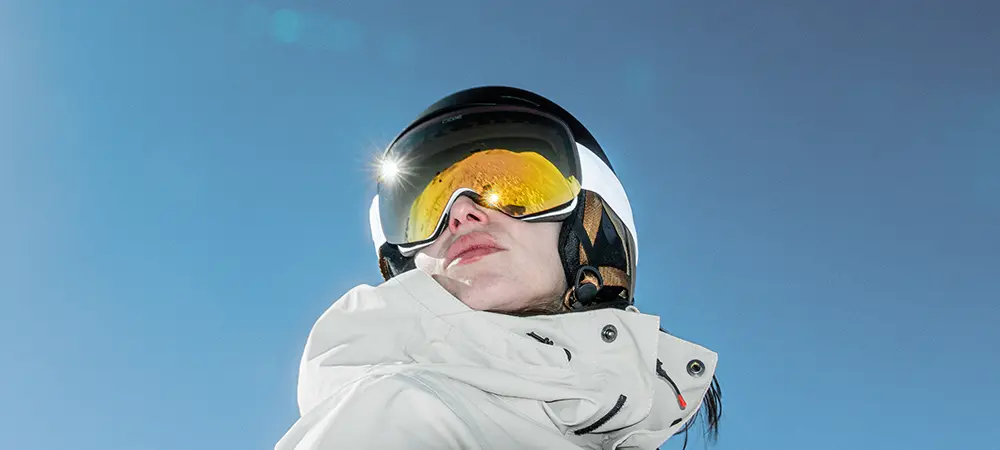
Goggles in poor condition mean a day spent squinting. Take them out of their pouch and look them over in daylight.
Tilt the goggles towards a window. A few micro-scratches around the edges are not a problem. However, a scratch in your field of view, or a crack, even a fine one, justifies changing the lens.
Good news: on goggles with an interchangeable lens, there is no need to replace everything. The CÉBÉ ATTRACTION goggles, for example, have a magnetic-clip lens that can be swapped in a few seconds.

The anti-fog coating is on the inside face of the lens. It is fragile: vigorous wiping or rubbing with a glove is enough to damage it. If your goggles were fogging up more and more last winter, it is often a sign that the coating is worn.
To clean ski goggles without damaging them:
Check that the foam that fits against your face is not peeling off, hardened or crumbling. Damaged foam lets in cold air and encourages fogging.
Stretch the strap to its maximum. A stretched-out strap, or one that has lost its silicone grip, will make the goggles slide on the helmet all day.
Have you changed helmet? Try the two together. The top of the goggles should sit under the helmet's visor peak without leaving a gap on the forehead, and the strap should stay in place behind the helmet.
Do you wear prescription glasses? The RIDGE 2 OTG goggles are designed to be worn over them.
The lens also needs to suit your skiing conditions. Several CÉBÉ goggles come with two lenses (category 3 for sun, category 1 for bad weather), and the CLOUD 3 VARIO is fitted with a photochromic lens that adapts to the light. To choose well, see our ski goggle lens guide.
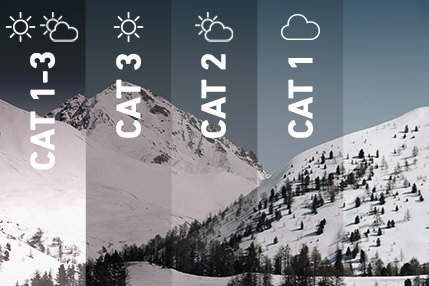
Category 1, 2, 3 or photochromic: our guide to choosing according to the weather.
Read the guideAll our goggles are compatible with all our ski helmets.

In the mountains, snow reflects a large share of the sun's rays. Your sunglasses therefore need to be up to the task, on the terrace as well as on the chairlift.
Not sure whether to choose sunglasses or goggles for skiing? Our article Sunglasses or goggles when skiing? will help you decide.

The situations where each one is the right choice, so you can decide well.
Read the articleSkis, boots and bindings also deserve a look before the first outing:
For waxing, edge sharpening or binding adjustment, a visit to a professional is still the safest option.
Book this visit a few weeks before the holidays: workshops fill up quickly in December.
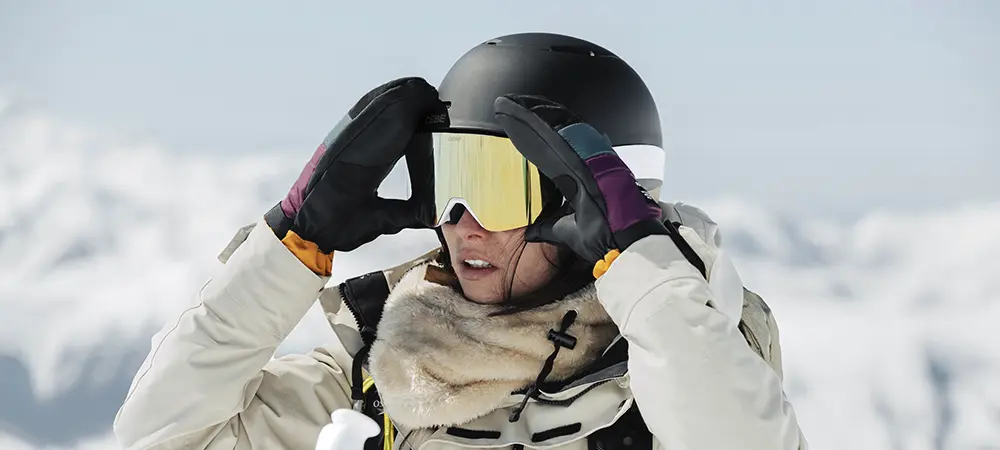
The last step, and the quickest:

Warm, soft and breathable for the whole season.
See the neck warmers| Equipment | What to check | If it is not right |
|---|---|---|
| Helmet | Shell free of cracks and dents, no major impact last season | Replace |
| Interior foam, straps, buckle, adjustment dial | Clean or replace the part | |
| Size still suitable (children) | Move up a size | |
| Goggles | Lens with no scratches in the field of view and no cracks | Change the lens |
| Fogging that persists after breathing warm air inside the goggles | Change the lens or the goggles | |
| Foam stuck down and supple, strap with good elasticity | Replace the goggles | |
| Compatible with your helmet | At CÉBÉ, everything is compatible… | |
| Sunglasses | Lenses intact, category 3 or 4, solid hinges | Replace |
| Skis and bindings | Base, edges, binding settings | See the ski technician |
| Boots | Shell, buckles, liners | See the ski technician |
| Gloves and clothing | Seams, waterproofing, zips | Wash, re-proof or replace |
Manufacturers generally recommend replacing a ski helmet after around 5 years, or sooner with intensive use. Materials age over time, even if the helmet looks intact.
Yes, after any major impact. The internal structure absorbs the energy of the impact by deforming, and will not protect as well in a second impact.
Rinse the outside with lukewarm water, then dry by dabbing with a microfibre cloth. Avoid rubbing the inside of the lens, where the anti-fog coating is.
The most common causes: a worn anti-fog coating, damaged foam, or goggles that fit poorly with the helmet and block the ventilation. Also avoid pushing your goggles up onto your forehead when you are sweating.
Not necessarily. On goggles with an interchangeable lens, only the lens needs replacing.
That's it, your equipment has passed its technical check. Ten minutes of checking today is the guarantee of making the most of your first day on the slopes. All that is left is to keep an eye on the snow reports.
Have a great season, and see you soon on the slopes!