A day of skiing is never like the next. The sun beats down at 9 a.m., fog rolls in at noon, snow returns in the afternoon. Your goggles need to keep up with these changes.

It all comes down to the lens. Its tint filters more or less light: this is its category. The lens category of a pair of ski goggles can range from 0 to 4. Choosing the right one means keeping a clear view, without glare or loss of visibility, especially when it comes to reading the terrain.

Here's how to read these categories, and which CÉBÉ goggles to choose for each kind of weather.

Ski goggle lens category: what the numbers say

The category indicates the share of visible light that passes through the lens. The higher the number, the darker the lens. These thresholds are set by the European standard.

CategoryLight transmittedTintWeather
080 to 100%ColourlessNight skiing
143 to 80%Light (yellow, rose)Whiteout, fog, snow
218 to 43%MediumHazy sky, sunny spells
38 to 18%DarkBright sun
43 to 8%Very darkGlacier, high altitude

Category 4 remains rare for ski goggles. It is mainly used in high mountain areas. The CÉBÉ range covers categories 1 to 3, which suit the vast majority of days on the slopes.

Good to know

The category measures visible light, not UV. And UV rays pass through clouds. We recommend wearing your goggles even under a grey sky.

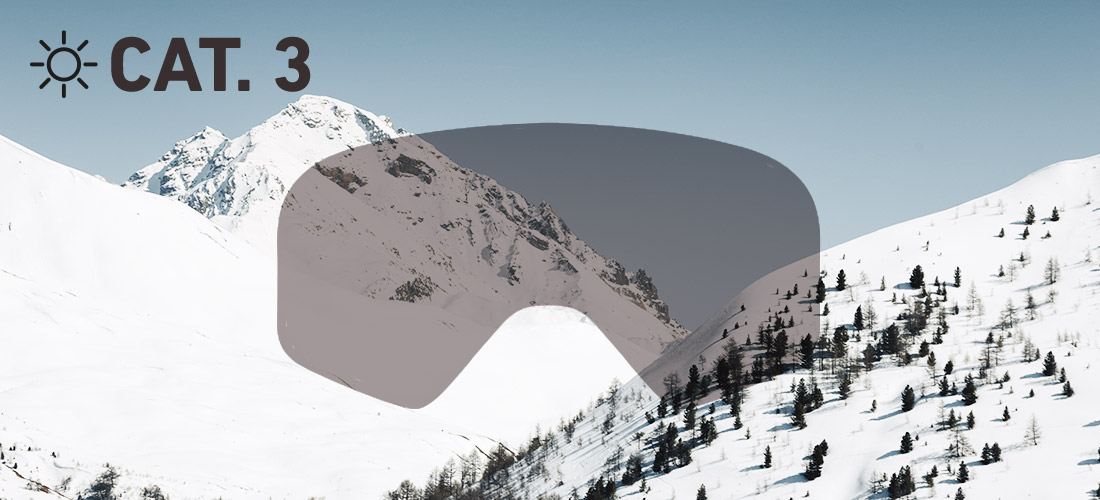
Bright sun on the slopes: category 3

Blue sky, fresh snow, glare: light can come from everywhere, in every direction. Snow reflects a large share of the sun's rays. A category 3 lens lets through only 8 to 18% of the light. It is the right choice for most sunny days.

8 – 18%

of visible light transmitted by a category 3 lens: the right setting for bright sun and glare off the snow.

At CÉBÉ, two technologies go even further.

FULL REVO: the mirror against glare

FULL REVO is a mirror coating applied to the lens of some of our goggles. It reduces glare and dazzle. It also improves contrast and clarity when the light changes. The lens is also resistant to scratches and moisture.

You'll find it on the CLOUD 3, with a toric lens for a wide field of view. It is also fitted to the STRIKER 2 HERITAGE, with a frameless cylindrical lens, in size L (wide face) or S/M.

HIGH CONTRAST: more readable terrain

HIGH CONTRAST is a filter built into the lens. It enhances contrast and the perception of detail. Bumps, hollows and icy patches stand out better. This filter is especially useful, even when the light fades.

The STORMER combines a category 3 cylindrical lens with HIGH CONTRAST technology.

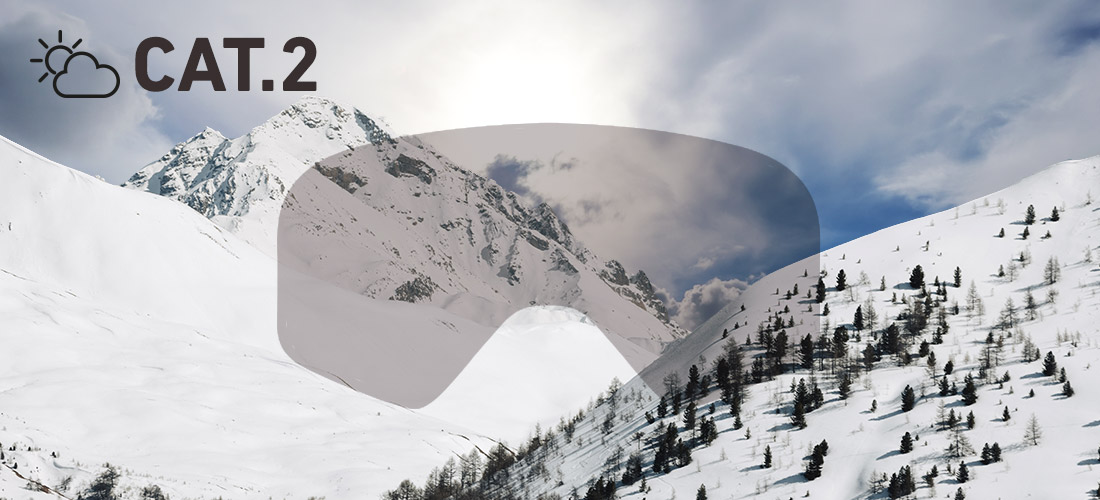
Hazy sun: category 2

Thin clouds, sunny spells, diffused light: category 2 covers these in-between days. It lets through 18 to 43% of the light. The lens is less dark than in category 3. You stay comfortable in the sun and keep good legibility under the clouds.

The STRIKER 2 and the RAZOR 2 are available in category 2 or category 3. It's up to you, depending on your habits.

Changing sky or forest

Do you often ski under a changing sky or in the forest? Aim for category 2.

Mostly in fine weather

Do you ski mostly in fine weather? Stick with category 3.

The STRIKER 2 offers a frameless cylindrical lens with a mirror effect, in size L or S/M. The RAZOR 2 focuses on simplicity with a cylindrical lens.

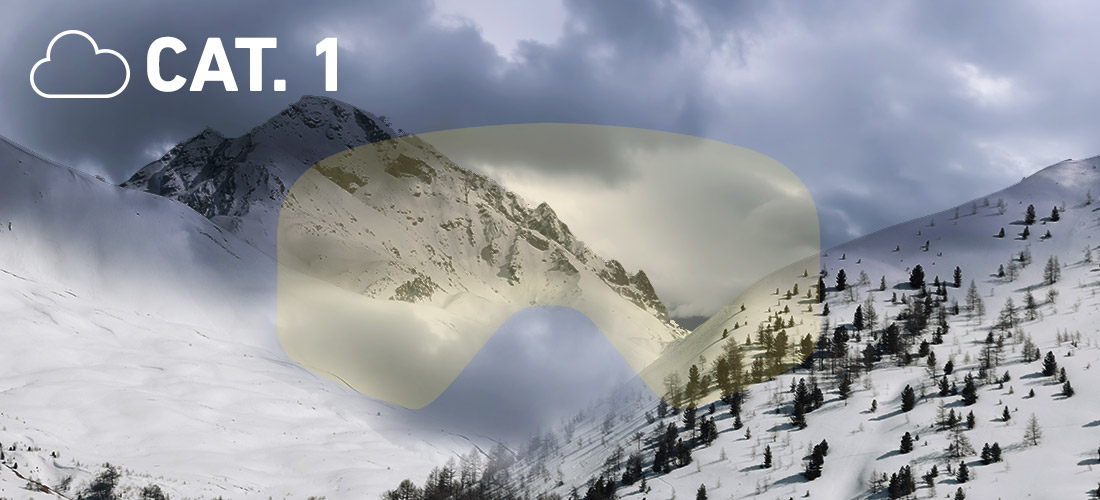
Whiteout and fog: category 1

Whiteout is the skier's trap. Sky and snow blend together. The terrain disappears or becomes barely perceptible. You feel the bumps under your skis before you see them. This sensation throws many skiers off balance and can cause falls, some of them serious!

A dark lens makes the problem worse. You need a light, category 1 lens. It lets through 43 to 80% of the light. In addition, its yellow tint improves the perception of terrain when light is lacking.

The RAZOR 2 ONE is designed for these conditions. Its yellow category 1 lens makes the slope easier to read in overcast or snowy weather. Do you wear glasses? The RIDGE 2 OTG is also available in category 1.

Warning

A category 1 lens is not suited to bright sun. It does not filter enough light.

Changing sky: the VARIO photochromic lens

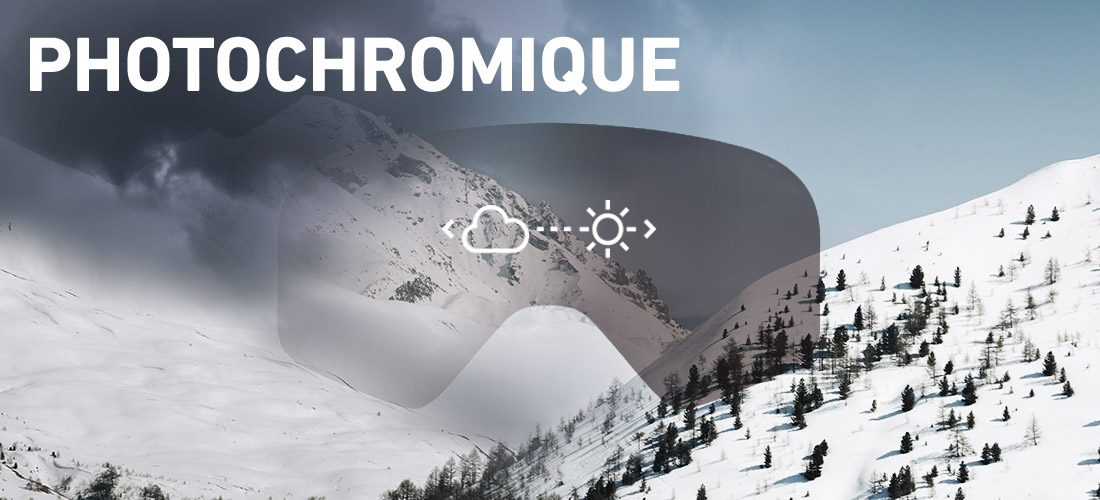
Don't want to choose between sun and fog? The photochromic lens does it for you. At CÉBÉ, this technology is called VARIO.

How a VARIO lens works

A photochromic lens changes tint depending on the light. It darkens when UV and brightness increase. It lightens when the light drops. VARIO lenses range from category 1 to category 3.

You set off in the sun, pass through a cloud, then find the blue sky again: the lens follows, with no adjustment needed. A single pair of ski goggles to cover most of the day's conditions!

Which VARIO goggles should you choose?

  • STORMER VARIO : the top of the range. Photochromic cylindrical lens, with HIGH CONTRAST technology.
  • CLOUD 3 VARIO : toric lens for a wide field of view, photochromic and HIGH CONTRAST.
  • STRIKER 2 VARIO : frameless cylindrical lens, in size L or S/M.
  • RAZOR 2 VARIO : cylindrical lens in size M, for a first pair of photochromic goggles.
  • RIDGE 2 OTG VARIO : photochromic spherical lens, compatible with prescription glasses.

ATTRACTION 2: our vision of interchangeable-lens goggles.

Prefer to stay in control? TheATTRACTION 2 comes with two lenses. The first is category 3, for sunny days. The second is yellow, category 1, for overcast weather and snow days.

The lenses attach with magnetic clips. You change lens in the blink of an eye. Slip the spare lens in your pocket and adapt to the weather of the moment.

What's the difference with VARIO?

The ATTRACTION 2 gives you a dedicated lens for each condition. The VARIO adapts on its own, without changing lens.

Our ski goggles designed for glasses wearers

You wear prescription glasses

OTG (Over The Glasses) goggles are worn over your glasses. Their frame is wider and their foam has cut-outs for the temple arms. The RIDGE 2 OTG is available in category 1 or 3. Its RIDGE 2 OTG VARIO version is photochromic.

To go further, read our guide Which ski goggles should I choose if I wear glasses?.

Our ski goggles designed for children

Which goggles should you choose to give your children the best skiing conditions?

Children's eyes are just as sensitive to UV as adults' eyes, if not more so. Choosing the right lens matters just as much as it does for you.

Ages 2 to 5

The JERRY 3, with a category 3 lens.

Ages 5 to 10

The HOOPOE 2 in category 3, or the HOOPOE 2 VARIO in photochromic.

Ages 10 to 14

The CHEEKY 2 OTG in category 3, or the CHEEKY 2 OTG VARIO in photochromic. Both are compatible with prescription glasses.

In summary: which ski goggles for which weather?

WeatherLensCÉBÉ models
Bright sunCategory 3, FULL REVO or HIGH CONTRASTCLOUD 3, STRIKER 2 HERITAGE, STORMER, STRIKER 2, RAZOR 2, RIDGE 2 OTG
Hazy sunCategory 2STRIKER 2, RAZOR 2
Whiteout, fogCategory 1RAZOR 2 ONE, RIDGE 2 OTG
Changing skyVARIO photochromic (1 to 3)STORMER VARIO, CLOUD 3 VARIO, STRIKER 2 VARIO, RAZOR 2 VARIO, RIDGE 2 OTG VARIO
Sun and whiteout, your choiceTwo magnetic lenses (3 and 1)ATTRACTION 2
ChildrenCategory 3 or VARIOJERRY 3, HOOPOE 2, HOOPOE 2 VARIO, CHEEKY 2 OTG, CHEEKY 2 OTG VARIO

Your questions about ski goggle lens categories

Can you ski in bad weather with category 3 goggles?

Yes, but you will lose visibility. The dark lens cuts out too much light when the sky is overcast. The terrain becomes difficult to read. In whiteout conditions, prefer a category 1 lens or a photochromic lens.

Photochromic or interchangeable lens: which should you choose?

The photochromic lens adapts on its own, with nothing to change. The interchangeable lens requires a gesture, but offers a dedicated lens for each type of weather. Want goggles you don't have to think about? Choose VARIO. Like to tune your equipment? The ATTRACTION 2 will suit you.

Which lens category for children's ski goggles?

Category 3 suits most family outings in fine weather. The VARIO photochromic lens also covers greyer days.

Find your lens

Key takeaways

Keep three rules of thumb in mind. Bright sun: category 3. Whiteout: category 1. Changing sky: VARIO photochromic. In between, category 2 and the interchangeable lens leave you the choice.

Still unsure about the shape or size of your goggles? Read our guide How to choose a ski mask?.

Have a great season on the slopes!

Loading...